


SFP Port Explained: The Ultimate Guide for Gigabit Switches (2026)

LINK-PP Official ·


SFP Ports in Modern Networking
In today's high-performance networks, flexibility and scalability are crucial. An SFP port on a switch or router SFP port enables network engineers to connect multiple media types, from fiber optic links to copper Ethernet. Whether you're deploying 1G SFP, 10G SFP+ ports, or 100G QSFP28 modules, understanding what an SFP port is on a switch is essential for optimizing network infrastructure.
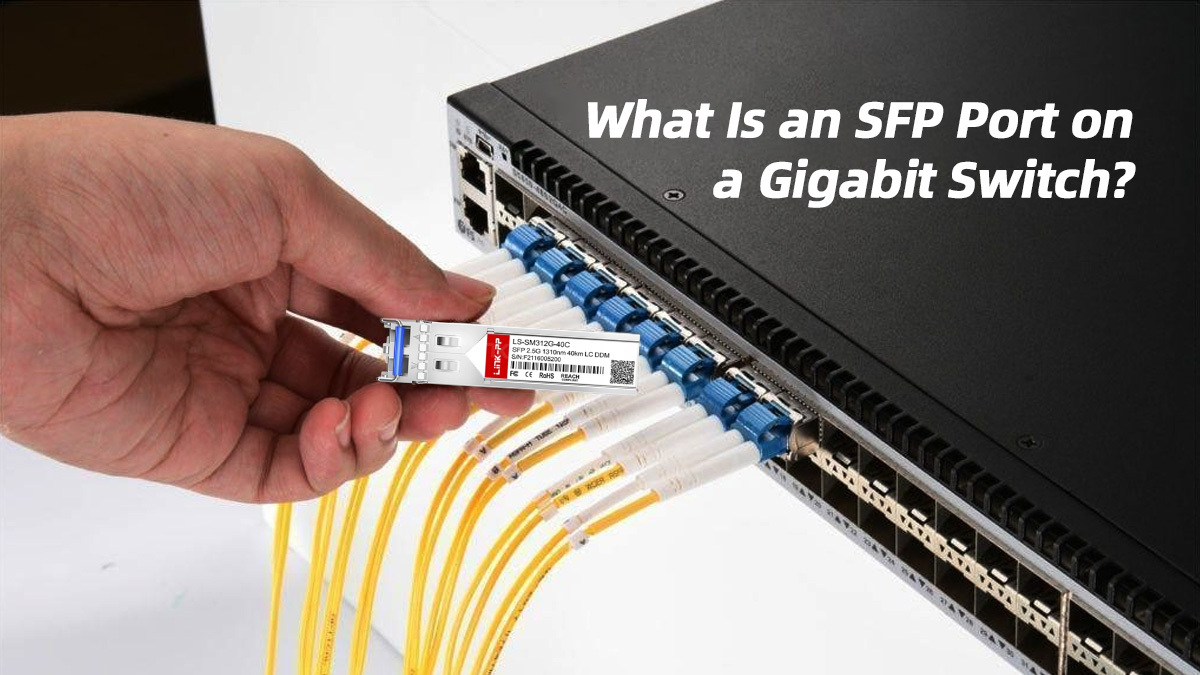
An SFP Module stands for Small Form-factor Pluggable. These hot-swappable modules allow network switches with SFP ports to support diverse applications, including high-speed uplinks, long-distance fiber connections, and copper network integration via SFP to RJ45 transceivers.
What is an SFP port?
An SFP (Small Form-factor Pluggable) port is a modular, hot-swappable interface slot found on network switches, routers, and media converters. It accepts various optical or copper SFP transceivers, enabling Gigabit and higher-speed data transmission over diverse media types like fiber optic or Cat6 cables.
Key Functions of SFP Ports:
- Flexible connectivity for fiber ports and Ethernet SFP adapters.
- Hot-swappable design allows for easy upgrades or maintenance without system downtime.
- Supports 1G SFP, 10G SFP+, and high-density QSFP modules.
- Extends network reach from 100 meters (over Cat6e) to over 100 km with single-mode fiber.
Technically speaking, an SFP port complies with the Multi-Source Agreement (MSA), ensuring interoperability across different vendors. It utilizes a 20-pin electrical interface to communicate with the host switch, supporting standards like IEEE 802.3z for Gigabit transmission and advanced Digital Diagnostic Monitoring (DDM) for real-time telemetry.
How an SFP Port Works on a Switch
A switch SFP port converts electrical signals into optical signals via SFP transceivers, or maintains them electrically for copper connections. By using an SFP to RJ45 adapter (e.g., 1000Base-T or 2.5G SFP), you can seamlessly connect legacy Ethernet devices to modern fiber-optic switches.
Standard Workflow:
- The switch sends electrical data to the SFP module via the internal circuitry.
- The SFP module converts the signal to optical (fiber) or adjusts the electrical levels (copper).
- Data travels through the fiber optic or copper cabling.
- The receiving SFP module converts the signal back to electrical for the destination switch or router.
Comparison of SFP Module Types
| Module Type | Medium | Max Distance | Primary Use Case |
|---|---|---|---|
| Gigabit SFP (Copper) | Cat5e/Cat6 | 100 m | LAN devices & Workstations |
| Gigabit SFP (MMF) | Multi-mode Fiber | 550 m | Short-range intra-building links |
| Gigabit SFP (SMF) | Single-mode Fiber | 10 km - 80 km | Campus backbone & Metro links |
| 10G SFP+ (MMF) | Multi-mode Fiber | 300 m | Server-to-switch uplinks |
| 10G SFP+ (SMF) | Single-mode Fiber | 10 km - 40 km | Core switch interconnects |
| 100G QSFP28 | Single-mode Fiber | Up to 80 km+ | Data center & Carrier aggregation |
| SFP to RJ45 | Copper (Cat6/6a) | 100 m | Standard Ethernet integration |
Key Benefits of SFP Ports
- Media Conversion Flexibility – Easily bridge fiber and copper networks using SFP to RJ45 adapters.
- Future-Proof Scalability – Upgrade from 1G to 10G SFP+ or 100G QSFP by simply swapping modules, not the entire switch.
- Operational Efficiency – Hot-swappable capability minimizes downtime during hardware replacements.
- EMI Resistance – Fiber SFP connections offer immunity to electromagnetic interference and improved security.
Common Use Cases
- Linking network switches across different floors or buildings via fiber.
- Utilizing router SFP ports for high-speed WAN or long-haul ISP connectivity.
- Connecting legacy copper-based servers to fiber switches via SFP to RJ45 transceivers.
- Deploying 10G SFP+ ports for low-latency, high-bandwidth server virtualization.
- High-density 100G aggregation within enterprise data centers.
SFP vs. RJ45 Ports
While RJ45 ports are convenient and cost-effective for short-distance copper links (up to 100m), they lack the distance and speed capabilities of SFP ports. Many enterprise switches feature Combo Ports, which offer a choice between an RJ45 or an SFP interface. Understanding SFP in networking is key to selecting the right hardware for specific speed, distance, and environmental requirements.
👨🔧 Data Center Architect's Field Note:
When deploying SFP ports in high-density enterprise switches, the most common point of failure isn't the port itself, but contamination. A single dust particle on an LC connector inserted into the SFP port can cause a 3dB signal drop. Always adopt an "inspect, clean, inspect" protocol before plugging any transceiver into your Gigabit switch's SFP port to maintain a low Bit Error Rate (BER).
Frequently Asked Questions
What is an SFP port on a switch?
An SFP port is a modular slot that accepts Small Form-factor Pluggable transceivers, allowing a switch to connect to either fiber-optic or copper cabling depending on the module inserted.
Can I use a Cat6 cable with an SFP port?
Yes. You can use Cat6 or Cat6a cables by inserting an SFP to RJ45 copper transceiver (1000Base-T or 10GBASE-T) into the SFP port.
What is the difference between SFP and SFP+?
The primary difference is speed. Standard SFP typically supports 1 Gbps, while SFP+ (SFP Plus) supports speeds up to 10 Gbps. Most SFP+ ports are backward compatible with standard SFP modules.
Is there a 100G SFP module?
Technically, 100G does not use the SFP form factor. It uses QSFP28 (Quad Small Form-factor Pluggable 28) modules, which are larger and designed to handle 100 Gbps throughput.
Conclusion
An SFP port on a switch is a cornerstone of modern, high-performance networking. From SFP to RJ45 adapters for copper integration to 10G SFP+ and 100G QSFP for massive data throughput, these ports provide the essential flexibility and scalability required today. By understanding the versatile uses of SFP interfaces, network engineers can build more efficient, future-ready infrastructures.
Advanced Reading: For network architects looking to optimize Total Cost of Ownership (TCO) and master IEEE standards, SerDes signal integrity, and MSA telemetry, explore our deep-dive [SFP Port Technical Guide].
📌 Related Topics & Further Reading
Tags:

-
Nav Menu
-
About LINK-PP
-
All Products
-
Applications