


Packet Optical Transport Networks (POTN) in Modern Infrastructure: Strategic Applications in Data Centers and Mobile Backhaul

LINK-PP Official ·


The explosive growth of cloud computing, real-time analytics, 5G mobility, and distributed digital ecosystems has fundamentally redefined the role of transport networks. Traditional optical transport has struggled to meet the simultaneous demands of extreme bandwidth, deterministic latency, multi-service integration, and operational simplicity. Packet Optical Transport Networks (POTN) emerged as the critical architectural response, combining packet switching efficiency with optical-layer scalability.

As organizations push toward hyper-converged infrastructures, POTN is no longer a future-proofing option—it is a foundational requirement. Two domains, in particular, demonstrate the highest impact: data centers, which serve as the digital core, and mobile backhaul, which carries the massive traffic load powering 5G and beyond.
This article presents a comprehensive examination of POTN use cases across these environments, exploring architectural principles, deployment models, and operational advantages. It also illustrates how high-performance connectivity components—such as optical transceivers, fiber cabling, and high-density interconnect hardware—play an essential role. In this context, LINK-PP provides a full suite of solutions aligned with the performance, scalability, and reliability required in modern POTN deployments.
💡 1. Understanding POTN: Convergence of Packet and Optical Layers
Packet Optical Transport Networks integrate the intelligence of packet switching with the high-capacity transmission capabilities of DWDM/OTN optical infrastructures. Unlike traditional separated architectures, POTN merges multiple transport layers into a unified model capable of supporting Ethernet, IP/MPLS, OTN, Fibre Channel, and emerging protocols.
Key Technical Characteristics
- Unified packet and optical switching for transport-layer consolidation
- Flexible grid and coherent optical technologies enabling high bit-rate scalability
- Deterministic transport with guaranteed latency, jitter, and availability
- Service abstraction supporting enterprise, mobile, and cloud traffic on one converged network
- Multi-layer visibility and control through common management and SDN orchestration
These capabilities help operators cope with evolving service demands while optimizing network CapEx and OpEx. POTN becomes particularly suitable for environments where capacity must scale dynamically and service-level guarantees are critical—hence its rapid growth in data center interconnects and mobile backhaul.
🏭 2. POTN in Data Centers: The Backbone of Cloud-Scale Architecture
Data centers have undergone a profound technological shift, evolving from centralized computing sites to globally distributed hyperscale and edge-driven ecosystems. This evolution has resulted in unprecedented traffic growth between data centers and within multi-tier data center fabrics. POTN delivers the flexible and deterministic transport necessary for this landscape.
2.1 The Rise of Demanding Data Center Workflows
Modern data centers support:
- Distributed cloud-native workloads
- High-frequency transactional systems
- Machine learning and GPU clusters
- Real-time data replication and disaster recovery
- Multi-site storage synchronization
- Edge-to-core workload migration
Each of these requires scalable line rates, extremely low latency, and reliable multi-protocol transport. Packet optical integration helps data center operators meet these objectives without over-provisioning or network fragmentation.
2.2 Why POTN Aligns Perfectly with Data Center Interconnect (DCI)
➡️ a) Extreme Bandwidth Scaling
The introduction of coherent optics, flexible grid DWDM, and higher-order modulation allows POTN systems to support 100G–800G per wavelength, with roadmaps extending toward 1.6T.
This is essential for:
- Interconnecting hyperscale facilities
- Supporting east-west traffic patterns
- Enabling high-volume storage and replication traffic
➡️ b) Transport Consolidation
Data centers often run a mixture of Ethernet, OTN, Fibre Channel, and low-latency links. Traditional transport forces separate layers, increasing cost and operational overhead.
POTN eliminates this with a single converged transport plane, simplifying network design and lifecycle management.
➡️ c) Guaranteed Performance
Mission-critical data center functions depend on deterministic transport. POTN provides:
- SLA-grade latency
- Zero-loss provisioning
- Fast protection switching
- Transport-level encryption
These capabilities reinforce trust in multi-site distributed architectures.
➡️ d) SDN-Ready Automation
POTN systems integrate seamlessly with modern orchestration frameworks. Automation enables:
- Fast activation of DCI services
- Real-time traffic engineering
- Predictive optical monitoring
This helps operators maintain service quality while scaling efficiently.
2.3 POTN Deployment Models in Data Centers
➡️ Model 1: Metro Data Center Interconnect
Ideal for linking multiple facilities within an urban cluster.
POTN enables high fiber utilization and service multiplexing.
➡️ Model 2: Regional and Long-Haul DCI
Supports large-scale replication, cloud reachability, and distributed compute.
High-capacity coherent optics maximize wavelength throughput across long distances.
➡️ Model 3: Edge-Core Interconnect
As edge computing expands, POTN provides deterministic connectivity between micro data centers and core cloud sites.
➡️ Model 4: Multi-Tenant and Colocation DCI
Colocation providers use POTN to deliver flexible, SLA-backed connectivity services to clients with diverse bandwidth needs.
For interface, reach and architecture planning, explore LINK-PP's data center interconnect solutions.
2.4 LINK-PP Solutions for POTN in Data Centers
To fully leverage POTN, reliable optical components are essential. LINK-PP supports DCI environments with:
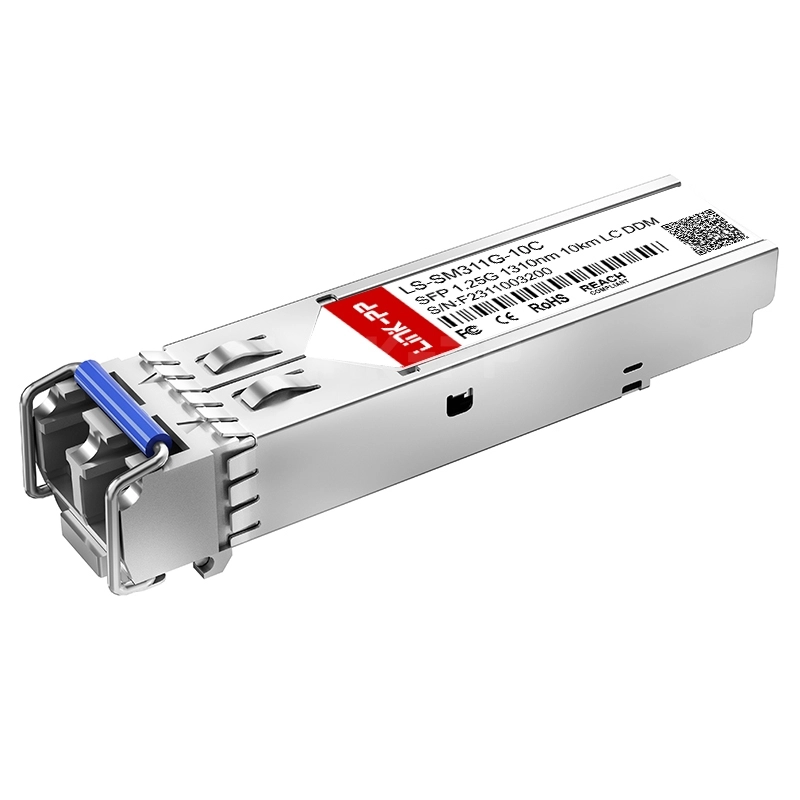
- High-performance optical transceivers
- 10G/25G for leaf–spine interconnect
- 40G/100G for aggregation and scaling
- 200G/400G/800G optical transceivers for heavy east-west traffic and DCI
- Fiber patch cords and cabling systems optimized for ultra-low loss
- High-density interconnect modules (MPO/MTP) enabling scalable data center expansion
- Custom OEM solutions for vendors integrating POTN architecture into switching platforms
These products ensure high reliability, interoperability, and long-term lifecycle value across complex transport environments.
Select Ethernet client interfaces and coherent line-side optics separately against the host, reach and transport-system requirements.
📡 3. POTN in Mobile Backhaul: The Transport Engine of 5G
Mobile operators face unprecedented network demands as 5G drives new classes of services and device density. Traditional backhaul networks—built around TDM or early packet architectures—cannot support the deterministic performance and scalability requirements of modern mobile systems.
POTN provides the ideal combination of packet flexibility, optical capacity, and transport-grade reliability.
3.1 5G and the Transformation of Backhaul Requirements
The jump from 4G to 5G brings profound increases in:
- Cell density
- User throughput
- Network slicing demands
- Latency-sensitive services
- Massive MIMO and fronthaul/backhaul integration
Backhaul networks must evolve to support:
- Deterministic latency below 10 ms for URLLC
- High synchronization accuracy for RAN performance
- Flexible multi-service transport
- Scalable Ethernet and IP/MPLS
POTN provides a converged architecture capable of addressing all these simultaneous requirements.
3.2 Key Benefits of POTN for Mobile Backhaul
➡️ a) Scalable Bandwidth for 5G Traffic Growth
POTN supports rapid bandwidth scaling, allowing operators to expand from 10G to 100G and beyond without major architecture redesign.
➡️ b) Integrated Sync and Timing
Advanced timing distribution meets 5G requirements for:
- Phase synchronization
- Frequency accuracy
- Coordinated multipoint (CoMP) functions
POTN's embedded timing mechanisms outperform traditional packet-only solutions.
➡️ c) Unified Backhaul, Midhaul, and Fronthaul Transport
C-RAN and O-RAN architectures benefit from POTN’s ability to handle diverse traffic types on a single network:
- Ethernet/IP for backhaul
- OTN for deterministic midhaul
- Low-latency services for fronthaul
This reduces the need for dedicated fiber builds.
➡️ d) Operational Optimization
POTN simplifies monitoring and troubleshooting through full multi-layer visibility—reducing operational cost and improving mean time to repair.
3.3 Deployment Scenarios for Mobile Backhaul
Scenario 1: Metro Aggregation Rings
POTN forms the high-capacity aggregation layer connecting small cells and macro sites to central offices.
Scenario 2: Transport for C-RAN/O-RAN Architectures
Centralized baseband processing drives enormous bandwidth needs. POTN ensures predictable, low-latency transport between distributed RUs, DUs, and CUs.
Scenario 3: Rural and Suburban Expansion
Coherent optics allow cost-effective deployment across long backhaul distances where fiber constraints exist.
Scenario 4: Multi-Service Wholesale Backhaul
Operators can lease capacity using flexible service containers and granular bandwidth provisioning.
3.4 LINK-PP Solutions for Mobile Backhaul POTN
LINK-PP provides telecom-grade connectivity solutions designed to meet rigorous mobile network requirements, including:
- Industrial-temperature optical transceivers
- 1G/10G for legacy and transitional sites
- 25G SFP28 modules for fronthaul and midhaul
- 100G+ modules for high-density aggregation
- Outdoor-rated fiber cabling and drop solutions tailored for tower and roadside deployments
- Low-latency and high-stability interconnect hardware supporting 5G synchronization needs
- Custom-designed optical transceiver coding for compatibility with equipment from multiple vendors
These components ensure stable performance in challenging environmental and operational conditions.
📈 4. Cross-Industry Trends Driving POTN Adoption
Across both data center and mobile backhaul environments, several macro trends are accelerating POTN investment:
4.1 Explosive East-West Traffic Growth
Cloud-native architectures generate massive lateral data flow, driving the need for scalable DCI.
4.2 Expansion of Distributed Edge Infrastructure
Edge computing relies on deterministic transport between small facilities and core networks.
4.3 Sustainability and Energy Optimization
POTN consolidation reduces operational power consumption by eliminating redundant transport layers.
4.4 Increased Security Demands
POTN's embedded encryption and service isolation help organizations meet compliance and risk-management requirements.
4.5 Lifecycle Simplification
Unified packet-optical management reduces skill requirements, manual processes, and truck rolls.
⚙️ 5. Strategic Considerations for Deploying POTN
When planning POTN for data centers or mobile backhaul, operators should evaluate the following factors:
5.1 Capacity Planning
Traffic forecasting is essential to determine wavelength scaling and multi-service encapsulation needs.
5.2 Multivendor Interoperability
Open architectures and standards-based optics—such as LINK-PP transceivers—enable flexible procurement strategies.
Review our optical transceiver validation process when defining the checks for a specific host, firmware and operating environment.
5.3 Automation and SDN Integration
Investment in orchestration platforms ensures long-term operational advantages.
5.4 Optical Layer Performance
Operators must consider fiber quality, OSNR, dispersion characteristics, and amplification needs.
For wavelength-specific 10G links, compare 10G CWDM/DWDM SFP+ transceivers against the host, wavelength plan and link-budget requirements.
5.5 Cost Models
POTN reduces complexity, but investment planning should compare:
- Integrated systems vs. disaggregated solutions
- Fixed-grid vs. flexible-grid
- Short vs. long-haul requirements
🔧 6. The Role of LINK-PP in the POTN Ecosystem
LINK-PP has established itself as a trusted provider of high-performance optical connectivity for both data center and telecom environments. The company's product portfolio aligns closely with POTN deployment needs, offering:
- Optical transceivers from 1G to 800G
- MTP/MPO high-density fiber solutions
- Armored and low-loss fiber cabling
- Passive optical components for DWDM systems
- Fully customized OEM solutions
- Robust compatibility testing across major equipment vendors
LINK-PP's solutions empower organizations to build stable, scalable, and cost-efficient packet optical infrastructures—supporting both the massive capacity needs of data centers and the stringent reliability requirements of mobile backhaul.
✨ Conclusion
Packet Optical Transport Networks have become indispensable in modern digital architecture. In data centers, POTN enables high-capacity, low-latency, multi-service connectivity essential for cloud-scale operations. In mobile backhaul, it provides the deterministic performance, scalability, and timing accuracy required by 5G networks and future mobility advancements.
As organizations navigate increasing traffic demand and operational complexity, POTN serves as the foundation for long-term network resilience and flexibility. Connectivity components play a critical role in realizing this value, and LINK-PP delivers the high-performance optical transceivers, cabling, and interconnect solutions necessary to support both data center and mobile ecosystem requirements.
Through strategic deployment and the right ecological partners, POTN becomes a powerful enabler of digital transformation—strengthening performance today and ensuring readiness for tomorrow's challenges.
Planning a POTN client interface or optical interconnect? Request optical transceiver selection support from LINK-PP. Share your host model, data rate, fiber type, distance, operating temperature and quantity so our team can review suitable options.
🔗 Further Reading & Resources



Tags:

-
Nav Menu
-
About LINK-PP
-
All Products
-
Applications