


Comparing 10G SFP and 25G SFP: Key Differences and Deployment Considerations

LINK-PP Official ·


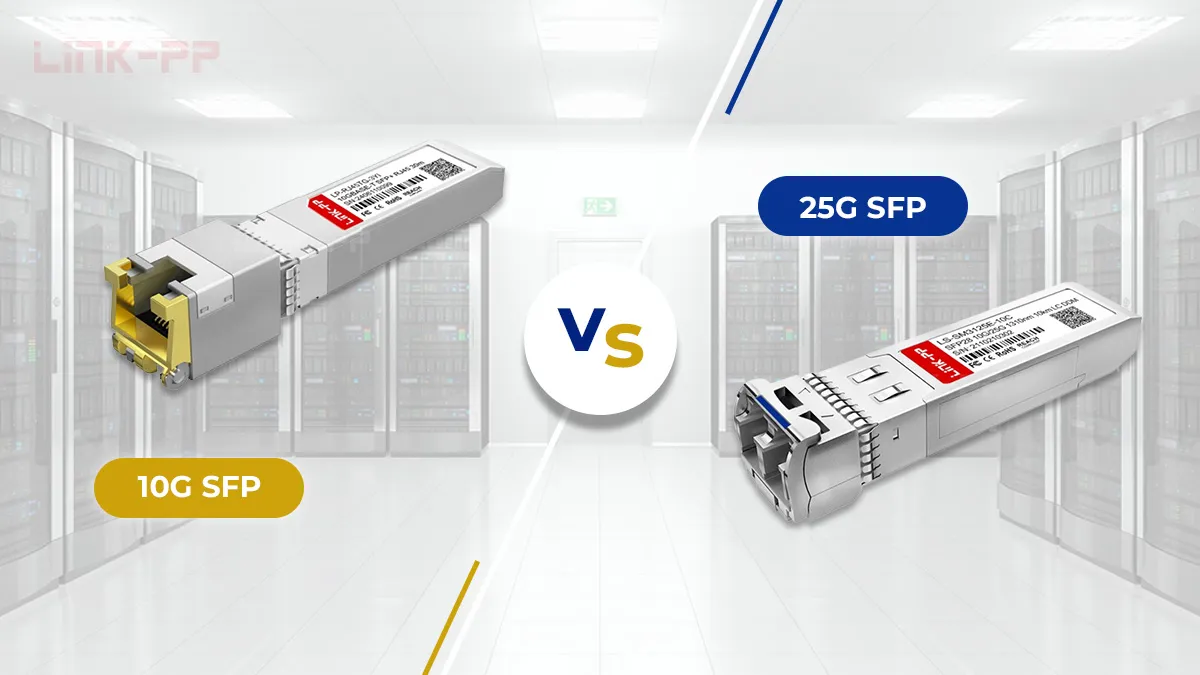
🔍 Detailed Comparison
1. Data Rates and Performance
-
10G SFP:
Supports data rates up to 10 Gbps, suitable for most enterprise applications. Commonly used in data centers and enterprise networks. -
25G SFP:
Offers higher data rates up to 25 Gbps, providing increased bandwidth for high-performance computing and large-scale data centers.
2. Compatibility and Form Factor
-
10G SFP:
Typically utilizes the SFP+ form factor, compatible with 10G Ethernet ports. -
25G SFP:
Uses the SFP28 form factor, designed for 25G Ethernet ports. Some 25G SFP modules are backward compatible with 10G ports, but this depends on the specific module and equipment.
3. Use Cases and Deployment Scenarios
-
10G SFP:
Ideal for standard networking needs, including server connections and storage area networks (SANs). -
25G SFP:
Suited for high-demand applications, such as AI/ML workloads, big data analytics, and high-frequency trading platforms.
4. Cost Considerations
-
10G SFP:
Generally more cost-effective, making it a preferred choice for budget-conscious deployments. -
25G SFP:
Higher initial investment but offers better scalability and future-proofing for growing network demands.
📊 Comparison Table
| Feature | 10G SFP | 25G SFP |
|---|---|---|
| Data Rate | Up to 10 Gbps | Up to 25 Gbps |
| Form Factor | SFP+ | SFP28 |
| Compatibility | 10G Ethernet | 25G Ethernet |
| Use Cases | Standard Networking | High-Performance Applications |
| Cost | Lower | Higher |
❓ FAQ Section
Q1: Can I use a 25G SFP module in a 10G port?
A: It depends on the specific module and equipment. Some 25G SFP modules are designed to be backward compatible with 10G ports, but this is not universally true. Always check the manufacturer's specifications.
Q2: What are the advantages of upgrading to 25G SFP?
A: Upgrading to 25G SFP provides higher data rates, increased bandwidth, and better scalability for future network demands.
Q3: Are 25G SFP modules more expensive than 10G SFP modules?
A: Yes, 25G SFP modules typically have a higher initial cost but offer better performance and future-proofing benefits.
🏁 Conclusion
Understanding the differences between 10G SFP and 25G SFP transceivers is crucial for optimizing network infrastructure. By considering factors such as data rates, compatibility, and cost, network engineers can make informed decisions that align with their organization's needs and future growth.
In today's data-driven world, optical transceivers play a crucial role in high-speed data transfer over fiber optic networks. Among them, Single Mode Fiber (SMF) transceivers offer exceptional performance in terms of speed, reach, and reliability. Link-PP has you covered when it comes to quality Single Mode Fiber Transceivers.
Single Mode Fiber Optic Transceivers are essential components in high-speed, long-distance data transfer networks. Their ability to support high data rates, reach, and reliability make them ideal for telecommunications, data centers, industrial networks, and defense applications. By carefully selecting Link-PP's SMF transceivers based on specific requirements, network administrators can harness the power of fiber optics to enable seamless and efficient data transfer over vast distances.
Tags:

-
Nav Menu
-
About LINK-PP
-
All Products
-
Applications